What to Look for When Buying an Electric Sauna Heater in 2026 for Beginners
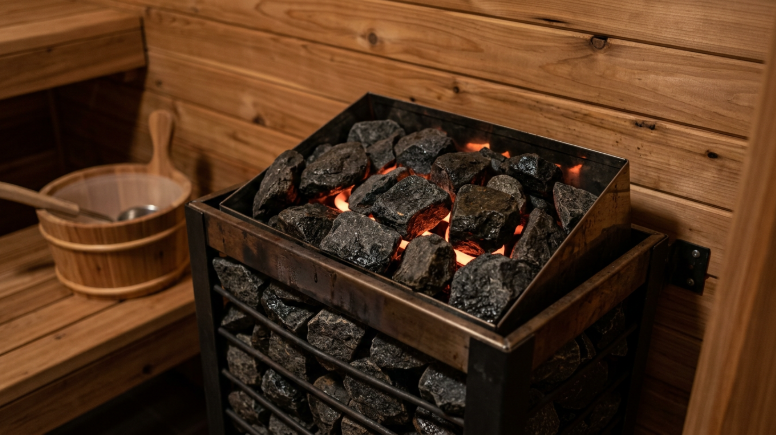
A first-time buyer should check four things before anything else: the heater’s kilowatt rating against the room’s cubic footage, whether it is UL or ETL listed, what circuit it requires, and how much rock capacity it holds. Get those four right and almost any reputable brand will perform well; get any one wrong and the unit either underheats, trips breakers, or fails an inspection. This guide walks through each decision in order, the way a beginner should actually make it.
Step 1: Measure the Room in Cubic Feet, Not Square Feet
Heater sizing charts are built around cubic footage because ceiling height and glass area change how much heat a room loses. Multiply length by width by height to get the number. A four by five foot room with a seven foot ceiling comes to 140 cubic feet. Skipping this step and shopping by floor space alone is the single most common reason beginners end up with an undersized heater that runs constantly and still cannot hold temperature.
See also:Limitless Life Just Got a Lot Less Simple. Here’s How Not to Trade One Risk for Another.
Step 2: Match Kilowatts to That Number
A commonly used starting point is one kilowatt per 45 to 60 cubic feet in a well-insulated, well-sealed room. Using the 140 cubic foot example above, that lands close to 3 kilowatts on paper, though most builders round up to a 4.5 kilowatt heater to account for heat loss through the door and faster warm-up. Every manufacturer publishes its own chart, and a reputable one adjusts the recommendation upward for a glass door or an exterior wall, since both pull more heat out of the room than an interior wood wall does.
Step 3: Decide Between Wall-Mounted and Floor-Mounted
Wall-mounted heaters bolt above the floor and free up usable bench space, which suits smaller two-person rooms where every square foot matters. Floor-mounted units sit on their own base, generally hold a larger rock bed, and tend to heat larger rooms more evenly because the heat source sits lower and rises through the whole space. Neither style is inherently better for a beginner; the room’s size and layout should make the call, not a preference formed from photos alone.
Step 4: Confirm the Electrical Requirements Before You Order
Most heaters above 6 kilowatts need a dedicated 240-volt circuit with a 30 to 50 amp breaker, and the exact number is printed on the spec sheet, not something to guess at. Smaller sub-6kW units sometimes run on a 20 amp 240-volt circuit. Before ordering anything, have an electrician confirm the home’s panel has spare capacity, because a panel already near its limit may need a subpanel or service upgrade first, and that cost belongs in the budget from day one rather than as a surprise after delivery.
Step 5: Check for UL or ETL Listing
Independent electrical safety testing is not optional for a beginner buyer. A UL or ETL mark on the spec sheet means the heater, its wiring, and its high-limit safety cutoff were tested by an accredited lab, which matters both for insurance purposes and for passing a permit inspection. A heater with no visible certification, or one that only lists a certification from an unfamiliar overseas testing body, is worth skipping regardless of how good the price looks.
Step 6: Compare Rock Capacity and Type
Rock capacity, listed in pounds, affects how much steam a heater can produce when water is poured over it and how evenly it holds heat between pours. Beginner-friendly heaters in the 4.5 to 6 kilowatt range typically hold 40 to 60 pounds of rock. Look specifically for peridotite or olivine stones sold by the manufacturer, since generic landscaping rock can contain moisture pockets that crack under repeated heat cycling.
Step 7: Compare Controls
Entry-level heaters come with a basic built-in dial for temperature and timer, while mid-range and higher units add a digital control panel, sometimes with a remote sensor mounted away from the heat source for more accurate readings. A digital panel with a delayed start timer is a genuinely useful upgrade for a first sauna since it lets the room preheat on a schedule instead of standing around waiting fifteen to twenty minutes after flipping a switch.
Step 8: Shop and Compare Before Committing
Once the specs are narrowed down, compare the same kilowatt class across a few retailers. Redwood Outdoors, Almost Heaven, and sites where you can browse SweatDecks electric sauna heaters all list wattage, rock capacity, clearance requirements, and warranty terms directly on the product page, which makes it possible to line up three or four comparable units side by side before calling an electrician for a final quote.
Step 9: Read the Warranty Terms Closely
Warranty length is one of the clearest signals of build quality available before you ever plug the unit in. Established brands typically back the heating element for at least two years and often five or more, while the control panel and wiring may carry a separate, sometimes shorter term. A warranty under two years, or a listing that mentions a warranty without stating a specific length, is a common sign of a lower-quality import unit built with thinner-gauge elements that fail early under repeated heat cycling. Read what the warranty actually covers as well; some policies cover the element but exclude the control board, which is worth knowing before a five-year-old digital panel fails and the replacement cost turns out to be nearly the price of a new heater.
It is also worth asking, before ordering, whether replacement parts, particularly the heating element and the high-limit safety switch, are sold separately by the manufacturer. A heater from a brand with an established parts pipeline in North America is far easier to keep running for a decade than one where the only fix for a failed part is buying an entirely new unit.
Why Getting the Sizing Right Matters Beyond Comfort
Research on sauna use consistently points to regular, sustained sessions as the pattern associated with reported benefits, which only happens if the room actually reaches and holds temperature reliably. A 2018 review in Mayo Clinic Proceedings summarized cardiovascular associations linked to habitual sauna bathing across multiple studies. A 2023 follow-up review in the same journal examined sauna bathing alongside other lifestyle factors and found the combination associated with added benefit. A 2001 review in The American Journal of Medicine described comparable associations between regular use and lower cardiovascular risk in long-term cohorts. These are population-level associations, not a guarantee for any one person, and beginners with a heart condition or who are pregnant should raise the topic with a doctor before starting a regular sauna routine.
Frequently Asked Questions
What size electric sauna heater does a beginner need? Measure the room in cubic feet and use roughly one kilowatt per 45 to 60 cubic feet. A small two-person room typically needs 4.5 to 6 kilowatts.
Do beginners need a floor-mounted or wall-mounted heater? Wall-mounted suits smaller rooms; floor-mounted heats larger rooms more evenly. Room size should decide.
What safety certification should an electric sauna heater have? Look for UL or ETL listing on the spec sheet. Skip units without a visible certification mark.
How much should a first electric sauna heater cost? Expect $600 to $1,400 for a 4.5 to 6 kilowatt unit, plus rocks and any needed electrical work.
References
- Cardiovascular and Other Health Benefits of Sauna Bathing: A Review of the Evidence, Mayo Clinic Proceedings, 2018
- Does the Combination of Finnish Sauna Bathing and Other Lifestyle Factors Confer Additional Health Benefits? A Review of the Evidence, Mayo Clinic Proceedings, 2023
- Benefits and risks of sauna bathing, The American Journal of Medicine, 2001
By Tom Bradshaw